 AI WORLD HQ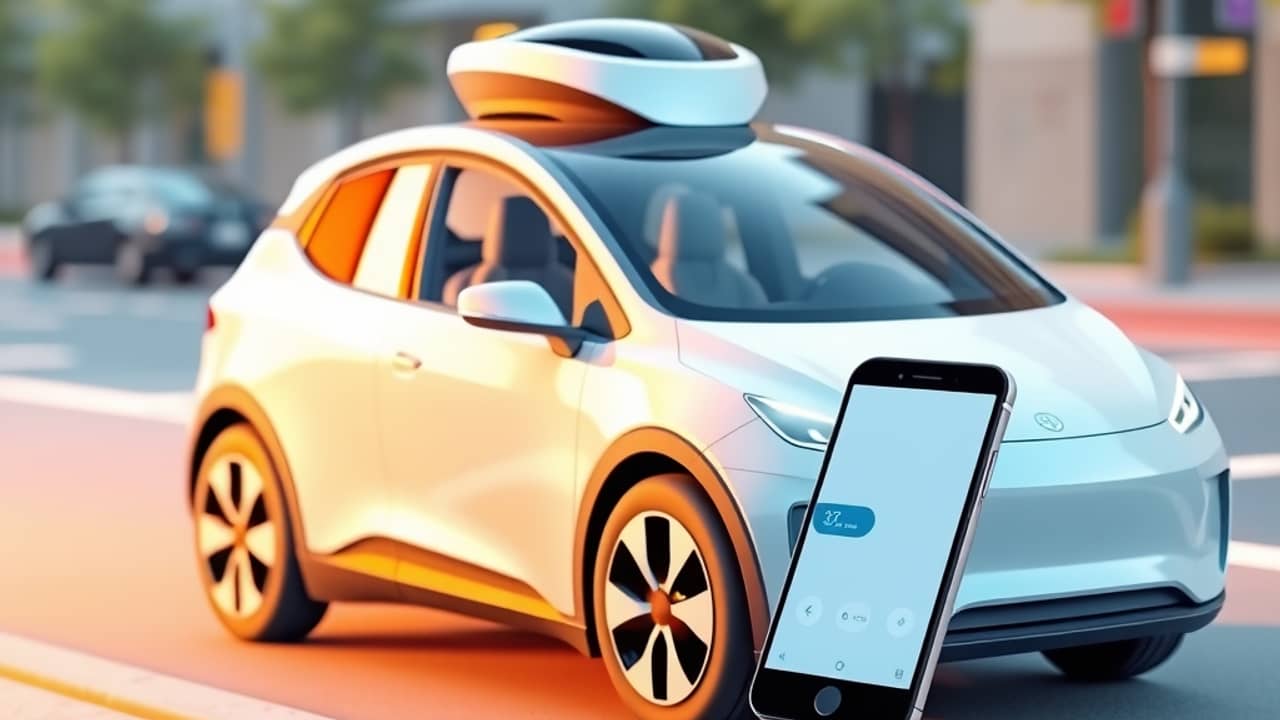
You've probably seen a headline about self-driving taxis and wondered whether they're actually picking up real people or just cruising empty test tracks. The short answer: real people, real trips, in real cities — though the technology is still rolling out neighborhood by neighborhood.
What a robotaxi actually is
A robotaxi is a regular car — usually an electric one — fitted with sensors and AI software that drives it without a human at the wheel. When you book one through an app, the car shows up, you hop in, and it takes you where you asked. No driver. No steering-wheel grip. No awkward chat about the weather.
The "physical AI" term you'll see more and more just means AI that does things in the real, physical world instead of only on a screen. A chatbot is AI in a chat window. A robotaxi is AI moving a two-ton vehicle through traffic.
How a car drives itself
There is no magic — just a handful of ordinary pieces, each doing a job:
- Cameras watch the road, like your eyes do. They read traffic lights, spot pedestrians, and follow lane lines.
- Radar measures how far away other cars are, even in fog or heavy rain.
- Lidar (think "laser radar") spins on the roof and builds a 3D map of everything around the car, down to the curb.
- An onboard computer — often built around powerful processors from companies like NVIDIA — combines all that data (sometimes called sensor fusion, basically "letting the cameras, radar, and lidar vote on what's really out there") and decides, every fraction of a second, whether to brake, steer, or keep going.
- High-definition maps give the car a pre-loaded memory of every intersection, stop sign, and speed limit on its route.
None of those pieces are new on their own. What's new is the AI brain that ties them together well enough to handle a chaotic city street at 5 p.m. on a Friday.
Where they're already running
Several companies operate paid robotaxi services today in parts of cities in the US and China. The typical service area is a defined zone of a metro area — often called a "geofence." Outside that zone, the service usually doesn't run yet. Trips are booked through a phone app, similar to calling a regular rideshare.
If you don't live in one of those zones, you probably won't ride one this year — but the fleets are expanding, and more cities are being added. Industry projections vary widely, but most analysts expect the global market to grow into the tens of billions of dollars within a decade and keep climbing after that.
Wrap-up
Robotaxis aren't science fiction anymore — they're an actual product you can hail in some cities today, and the technology behind them is the same family of breakthroughs powering new warehouse robots and self-driving trucks. The thing to do this week: check whether a robotaxi service operates where you live, and if it doesn't, get on a waitlist. The shift is happening one neighborhood at a time, and the early riders will be the first to feel what's actually different about a car with no one in the front seat.