 AI WORLD HQ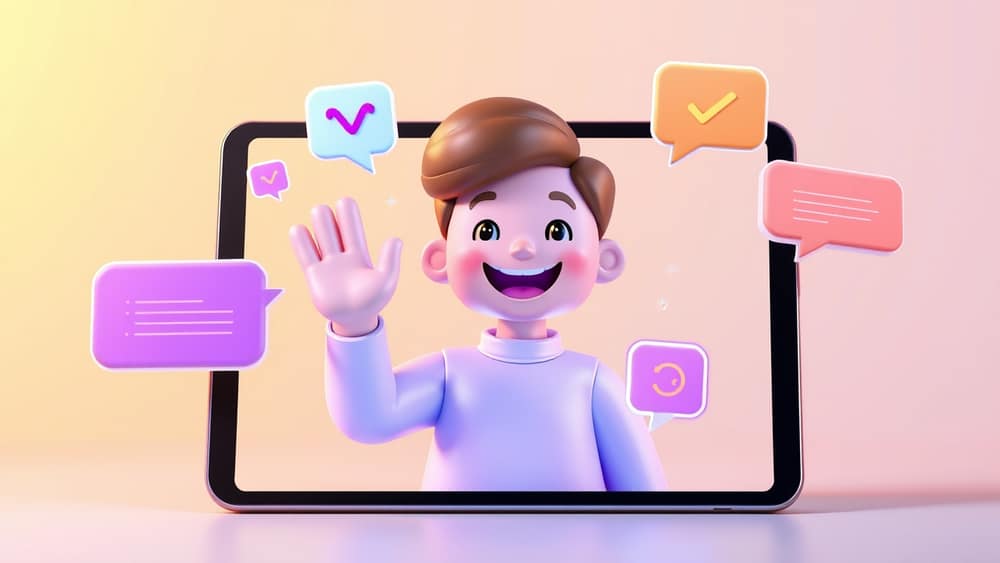
Imagine picking up the phone to call your bank — and the person who answers looks you in the eye, smiles when you smile, and answers your question in real time. Not a recorded video. Not a chatbot pretending to be human. A real conversation, with a face. That's where AI is heading, and it's closer than most people realize.
What's actually changing
For the last few years, AI assistants have mostly been text-based. You type a question, you get a written answer. Some tools added voice — think of the talking mode in ChatGPT or Gemini Live — where you can speak and hear the AI respond like a phone call.
Now a new layer is being added: a face. Companies like D-ID are building tools that let AI agents (AIs that can take actions, not just chat) appear as a digital avatar — a moving digital character — on screen while you talk to them. The conversation flows in real time. There's no "press play and wait" delay. The avatar listens, thinks, and responds like a person in the same room would.
How the pieces fit together
To make this work, several technologies have to talk to each other smoothly:
- Real-time communication — the same kind of tech that powers video calls in apps like Zoom. It's what lets you and the AI respond without awkward pauses.
- Multimodal AI — an AI that can handle voice, video, and text at the same time. So the system can hear you, see your reaction if your camera is on, and talk back.
- A framework like LiveKit — think of it as the plumbing that connects video, audio, and AI together in real time. It's the same kind of tech that makes a video call with a person in another country feel instant.
Each piece on its own isn't new. What's new is stitching them together so the experience feels like talking to an actual person.
Where you'll bump into this first
You probably won't install this at home. But you'll meet it through services you already use:
- Customer service — instead of typing into a chat bubble, you might talk to a friendly digital assistant that has a face
- Online tutoring — a digital tutor that can watch your work, explain things out loud, and answer follow-up questions
- Healthcare bookings and admin — handling appointment scheduling or basic questions with a face rather than a menu
- Training and onboarding — companies using digital instructors to walk new staff through procedures
For most people, the first encounter will feel like a video call — except the other person on screen is an AI.
A quick reality check
This tech is real, but it's early. The conversations can still feel a bit stiff. The avatars don't always get the timing right. And not every company is rolling it out tomorrow. What matters is the direction: AI is moving from text boxes into the kind of face-to-face moments we've always had with other humans.
Wrap-up
Real-time visual AI agents are a small step in tech terms, but a big shift in how we interact with machines. You'll mostly meet them as a customer first, not as a user at home. The next time you ring a service line or click a "chat now" button, notice whether the experience is text, voice, or video. That's the easiest way to track this shift as it happens.