 AI WORLD HQ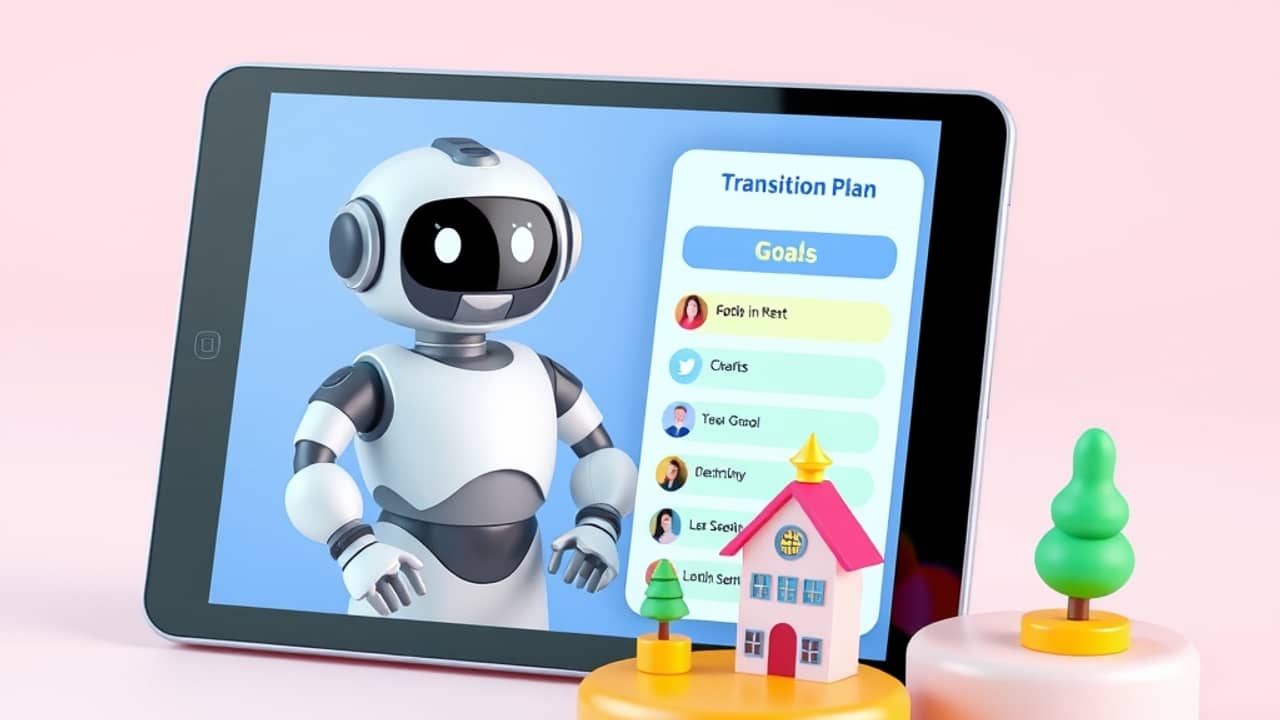
You finally got the email about your child's transition meeting — and then you see the PDF: forty pages of acronyms, goals, and legal language. Two weeks to read it, write your own comments, and shape what your kid's next few years will look like. Sound familiar?
A new wave of AI tools is being built specifically for this moment. They're not designed to replace the adults in the room — they're meant to take on the part everyone dreads: the paperwork.
What a transition plan actually is
In the US, the Individuals with Disabilities Education Act (commonly called IDEA — a federal law that guarantees a free, appropriate public education for students with disabilities) requires schools to start writing a transition plan for students with disabilities, usually around age 16. The plan spells out what the student is working toward after high school: further education, a job, independent living, or some mix.
In practice, these plans take hours to write, hours more to review, and they pull in teachers, counselors, and sometimes outside specialists. For parents, especially those who don't have a background in special education, the process can feel like translating a different language.
Where AI fits in
Conversational AI — the same kind of technology behind ChatGPT and Claude — is now being used by some school districts to speed up three specific jobs:
- Drafting the plan from notes. A teacher types or dictates observations about a student, and the AI produces a draft plan aligned with IDEA requirements. What used to take days can come back in minutes.
- Translating the legalese. Parents can paste a section of the plan into a chatbot and ask, in plain English, "What does this actually mean for my child?" — and get an answer they can use in a meeting.
- Spotting what's missing. The AI can flag parts of a draft that don't fully address IDEA requirements, so nothing important gets left out by accident.
These tools run on cloud platforms (think of them as rented computers in big data centers), which is how they're able to handle the work of an entire district at once.
What's worth being cautious about
A few things to keep in mind:
- AI drafts, humans decide. The plan still needs a real educator — and you — to sign off. Treat the AI's output as a starting point, not a finished document.
- Privacy matters. A student's school records are sensitive. Ask your district what data the AI sees, where it goes, and whether it stays private.
- AI can still make mistakes. If a goal in the draft doesn't sound right, push back. You know your child.
Wrap-up
IDEA transition plans aren't going anywhere — and they shouldn't. What is changing is how much of the heavy lifting happens before a family ever sits down in a meeting room. If your school district is rolling out an AI tool in this space, ask questions, read the drafts yourself, and remember that the technology is there to support the conversation, not end it.