 AI WORLD HQ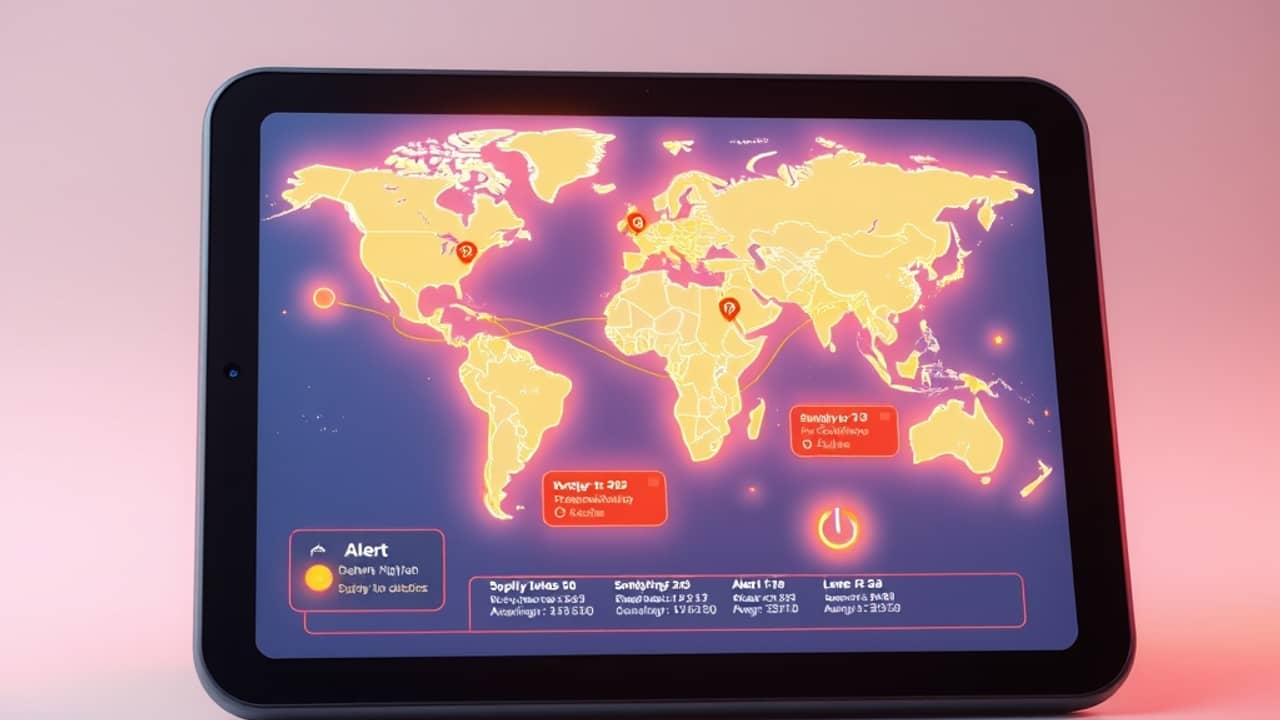
You've probably noticed a product you wanted was out of stock, or your delivery took an extra two weeks. Sometimes that's a company being slow. Often, it's a chain reaction — a shipping lane closed, a factory shut down for a week, a key ingredient suddenly hard to find. Businesses of all sizes are betting that AI can help them see those chain reactions coming.
What "supply chain" actually means
A supply chain is just the whole journey a product takes — from raw materials, to factory, to warehouse, to shipping, to the store or your door. Every business has one, even if it's small. A bakery's supply chain includes the flour supplier, the delivery van schedule, and the bakery's own shelf space.
When any link in that chain stumbles, the whole thing can wobble. That happened dramatically during the pandemic, and it keeps happening for smaller reasons every week — port strikes, hurricanes, a single supplier going under.
What AI does differently here
A human planner can watch a few signals at once. An AI system can watch thousands — public news, weather forecasts, port congestion data, fuel prices, social media chatter, and historical sales patterns.
Then it does two things well:
- Pattern-spotting. It notices things like "every time the Suez Canal has a delay in October, our shipment of X arrives two weeks late." That's a pattern humans sometimes see in hindsight, but the AI flags it early.
- Forecasting demand. It tries to predict how much you'll need next month, next season, or the next holiday rush, so you don't over-order (waste, storage cost) or under-order (lost sales).
This isn't magic. It's the same idea behind weather forecasting — many data points, statistical models, probabilities instead of certainties.
Where this helps in practice
For a small online retailer, the practical wins look like:
- Earlier warnings. The system flags that your usual shipping lane through a certain port is congested, and suggests an alternate route two weeks before your shipment is due.
- Smarter reordering. Instead of reordering the same amount every month, the AI suggests more before a holiday you've historically seen spike, and less before your slow season.
- Backup suppliers on standby. Some tools rank your suppliers by reliability, so you know who to call first when your main supplier can't deliver.
None of this replaces a human decision. It just gives the human more time and better information to decide.
Wrap-up
Supply chains will always have surprises. AI doesn't prevent them — it just gives businesses more lead time to react, so a small wobble doesn't become a lost sale or a stockout you remember. A useful first step: check whether the inventory or e-commerce tool you already use has a forecasting feature turned on. If it does and you've never opened it, this is the week.