 AI WORLD HQ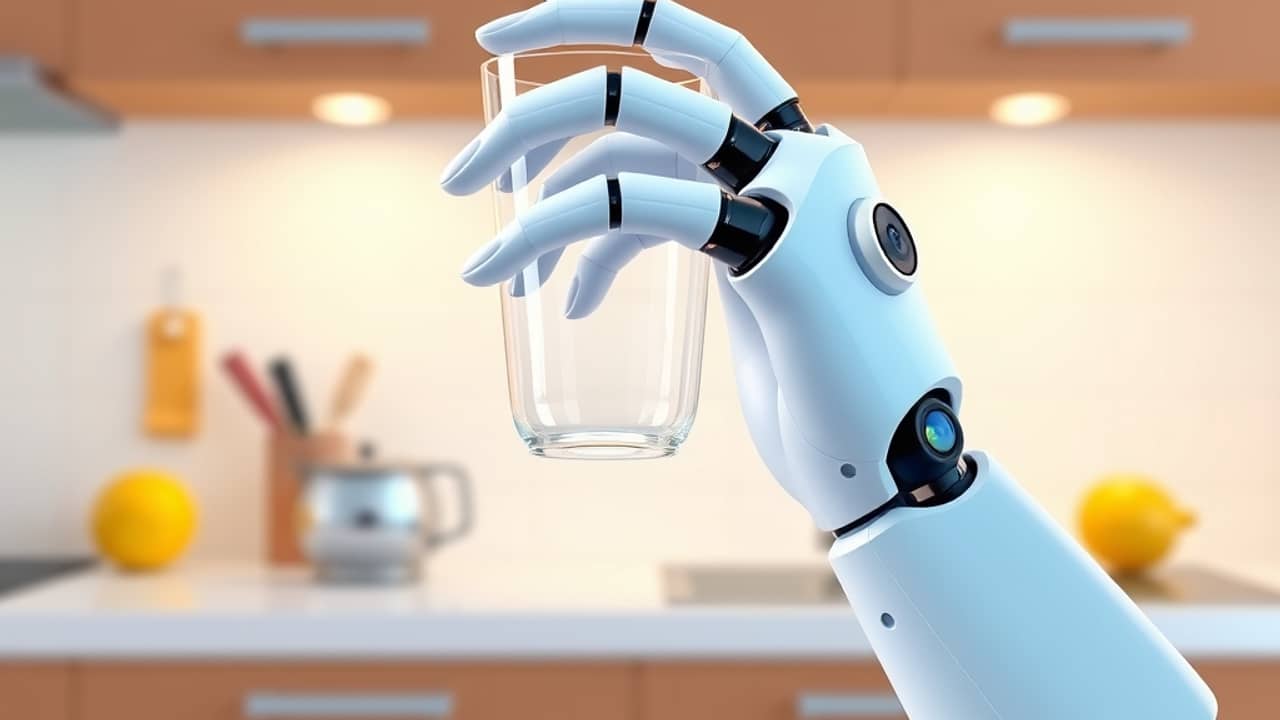
You're at the kitchen sink, drying a glass with one hand while the other reaches for a spoon. For most people, that's nothing. For someone using an older prosthetic hand, the same moment can mean pressing a button, waiting for a click, then pressing again — once for the glass, again for the spoon. Multiply that across a day, and the small friction adds up fast.
A small but growing group of engineers and startups are trying to remove that friction using AI. The idea is simple to describe: give the prosthetic a tiny camera and a small AI model (an on-device "brain" that runs the recognition directly on the hardware, with no internet needed), let it see what it's about to grasp, and pick the right grip on its own. No button, no menu, no mental checklist.
How vision-first prosthetic arms actually work
Think of it like this. A traditional prosthetic hand has a few preset grips — pinch, fist, hook, and so on. The wearer has to choose which one to use. A vision-first prosthetic adds two new parts:
- A small camera, usually mounted on the wrist or the back of the hand
- A compact AI model that runs locally (right on the device, not in the cloud)
When you move your hand toward an object, the camera takes a quick snapshot. The AI model looks at the image and asks, in effect, "Is this a cup, a pen, a spoon, a key?" It then triggers the matching grip.
For the wearer, the experience changes from decide, then press to just reach. That's the whole point. The mental load — the constant micro-decisions — gets handed to the software.
Some prototypes pair the prosthetic with AI glasses (like Meta's smart glasses) as an optional extra camera. The glasses see the object a moment earlier than the hand does, which gives the AI more time to prepare the grip. But the hand itself can usually work without them.
What's still early
This is honest territory: prototypes are impressive in demos, but everyday life is messier than a lab. A few real limits worth knowing:
- Lighting matters. A camera pointed at a backlit glass on a sunny counter is a harder problem than the same glass under a lamp.
- New objects need training. If it has never seen a particular mug, the AI has to guess from shape, and the guess isn't always right.
- Battery and weight. More computing means more battery, and more battery means more weight on the forearm.
- Cost. Early bionic arms with AI control are expensive, and insurance coverage varies widely by country and provider.
So the technology is real, but most people who could benefit today are still using older, switch-controlled prosthetics. That gap is what the next few years of research are trying to close.
Wrap-up
AI-powered prosthetics are a useful test case for thinking about AI in general: a small camera, a compact model, and one job done well can change what a tool asks of the person using it. The prototypes aren't in every clinic yet, and there are real questions about cost, training data, and durability. But the direction is clear — the best assistive tech should feel less like operating machinery and more like just moving your hand.
A useful follow-up read is to look up how object recognition models work in plain terms — the same technology in your phone's camera is the building block these arms are built on.