 AI WORLD HQ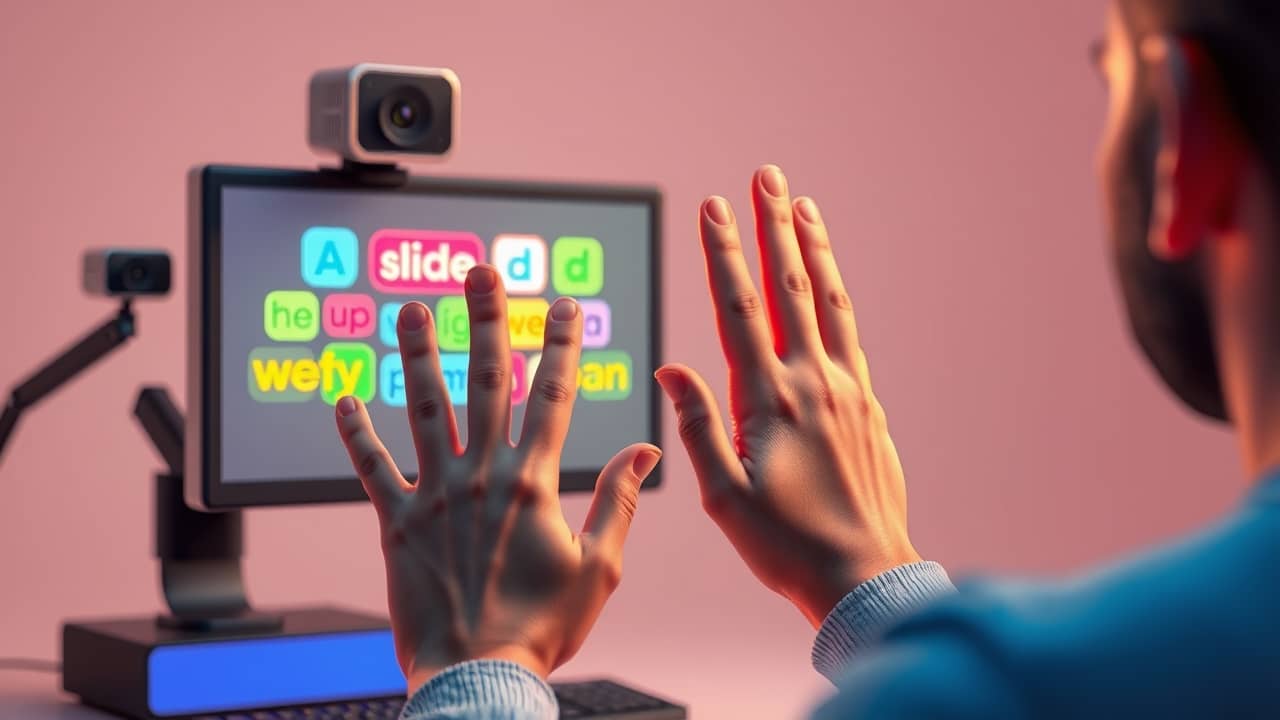
Think about the last time you waved at someone across a noisy room, or used your hands to explain a route to a stranger on the street. Hand gestures are a normal part of how we communicate. But for millions of Deaf and hard of hearing people, sign language isn't a side tool — it's the main one. A new generation of AI is now learning to read those hand movements and turn them into typed-out words.
What sign language AI actually does
The technology usually goes by the name "sign language recognition," or sometimes SL2T, short for sign-language-to-text. The core idea is simple: point a camera at someone signing, and the AI watches the shape of their hands, where they move, and the expressions on their face. Then it translates all of that into sentences.
To do this, the AI uses computer vision (just a phrase for "teaching a computer to see and understand images or video") combined with a language model — the same kind of AI brain that powers ChatGPT. One part looks at the visual movements; another part figures out what those movements mean as words. Together they can produce something like: "Where is the nearest pharmacy?"
Researchers have been working on this for years. What's different now is that the AI is getting good enough to run on everyday devices — a phone, a laptop webcam, maybe a smart TV — without needing a giant computer in the background.
Where it could help in everyday life
A few real situations where this kind of AI could matter:
- Video calls. Imagine joining a work meeting and having captions appear automatically when a Deaf colleague signs. Today, that usually needs a human interpreter booked ahead of time. With AI, it could happen by default.
- Doctor visits. Health care has been one of the hardest places for Deaf patients to communicate without an interpreter in the room. A sign language AI on a tablet could give more independence.
- School and learning. Students who sign could get instant captions of their own words, making note-taking and group projects easier.
- Quick everyday conversations. A chat at a shop counter or in a hotel lobby — moments that today often fall back on paper notes or phone typing.
Where the limits still are
It's worth being honest: this is hard for the AI. Sign languages aren't universal — American Sign Language, British Sign Language, Japanese Sign Language, and dozens of others are all different languages, with their own grammar. Many systems today only recognize one. Lighting needs to be good, the hands clearly visible, and the signer needs to be using a style the AI was trained on.
So no, sign language AI isn't yet a replacement for a skilled human interpreter in serious settings like legal or medical conversations. But it can help fill the gaps where no interpreter is available at all — and that's already a real improvement.
A simple takeaway
AI isn't going to learn sign language perfectly overnight. But the fact that it can read hand movements at all, on a phone, in real time, is a quiet but real shift. For Deaf and hard of hearing people, every bit of easier communication makes everyday life a little more level.
Try one thing this week: notice how often you gesture with your hands when you talk. Then look for the new sign language features appearing in your video call apps — several are already available to test in beta right now.