 AI WORLD HQ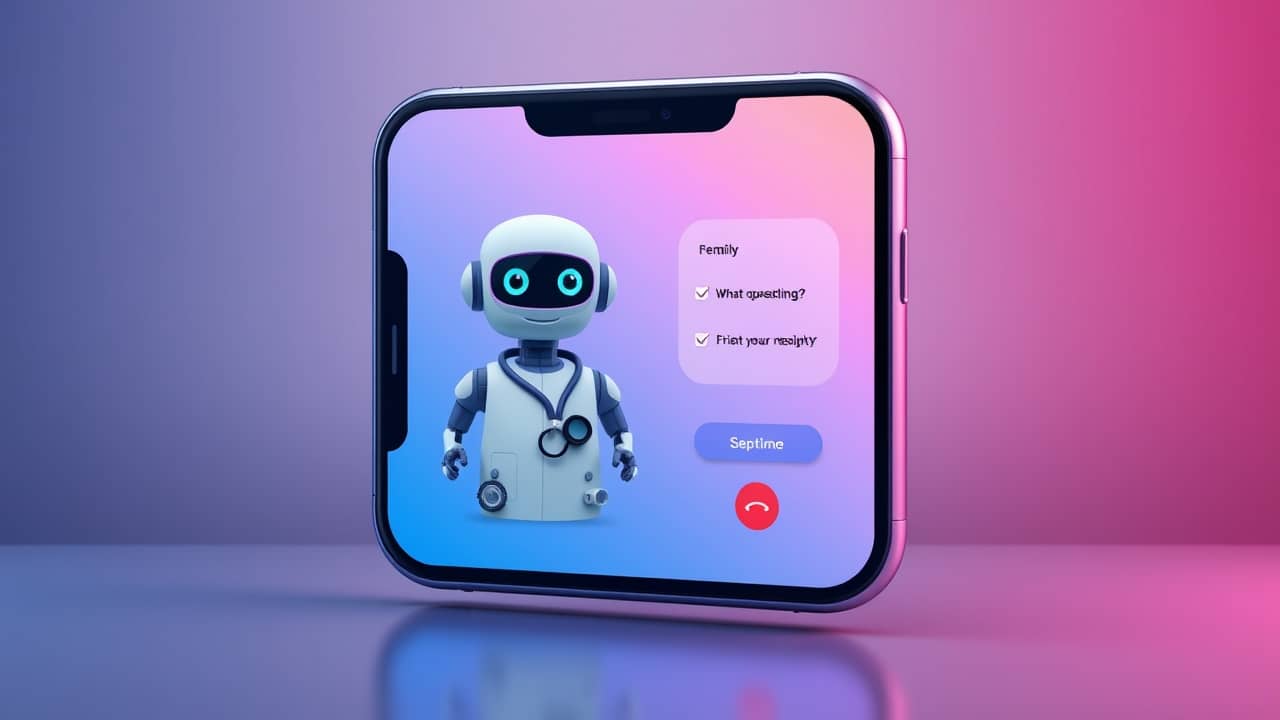
Imagine you open a video call to talk to your doctor. Instead of a person, an AI greets you, asks how you've been feeling, and follows up about your symptoms — the way a real visit usually starts. That's roughly what a new research study from Google showed their medical AI can now do.
The system is called AMIE (Articulate Medical Intelligence Explorer). It's a research project, not a product you can sign up for. But the latest study pushed it into territory most medical AIs haven't reached: a real-time, back-and-forth conversation with visual cues.
What AMIE actually did in the study
In the new research, AMIE was tested in simulated video consultations. The AI:
- Listened to the patient's description of symptoms in natural language — speaking or typing the way you normally would to a doctor
- Saw the patient via video, picking up on visual clues like a rash or swelling (using multimodal AI, which means handling text, images, and audio together instead of just one type of input)
- Asked clarifying questions in real time, the way a doctor would during a history-taking session
- Suggested possible diagnoses for a clinician to review
The study compared AMIE's clinical reasoning against that of real doctors working from the same transcripts. It didn't replace doctors — it was measured against them.
Important limits to know about
A few things keep this firmly in the research lab, not in your doctor's office:
- The patients were simulated — actors playing roles, not real people seeking care
- A human clinician was always in the loop for any actual diagnosis
- AMIE is not approved by any medical regulator and isn't available anywhere
- No prescription, treatment, or test was ever ordered by the AI alone
This is a proof of concept — a way to show the technology works under controlled conditions. Years of clinical trials and regulatory review would still be needed before anything like this could see real patients.
What's genuinely new here
Most medical AI tools today do one thing well: read a scan, summarize a chart, or answer a typed question. AMIE went further by handling a multi-turn conversation — asking and answering, like a real telehealth visit. That kind of back-and-forth is harder than it sounds. The AI has to remember earlier answers, follow up meaningfully, and not lose the thread of the conversation.
It also processed what it saw on the video, not just what was typed. That combination — real-time conversation plus visual understanding — is what makes this demonstration notable.
Wrap-up
Google's AMIE study is one of the clearest signals yet that medical AI is moving beyond typed text toward something closer to a real conversation. It's also a good reminder that a clever demo isn't the same as a tool you can use. For now, the most useful thing you can do is pay attention to how AI features show up in your actual healthcare apps — and ask what a tool is approved to do, and what role a human still plays.