 AI WORLD HQ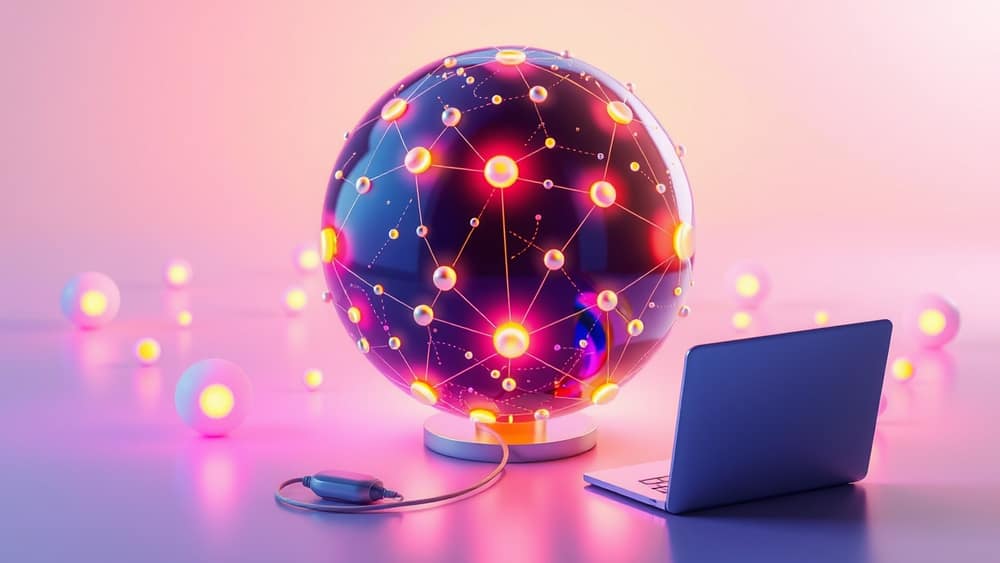
The AI Superpower That Connects the Dots for Smarter Answers
Have you ever asked an AI a question and felt like it gave you a good answer, but missed the deeper connections, or even made something up? Imagine an AI that doesn't just know facts, but truly understands how those facts relate to each other, like a super-smart detective linking clues. This new ability is making AI much more reliable and insightful, helping it give you better answers to complex questions.
The AI That Sees the Whole Picture
Traditional AI models are great at processing vast amounts of text, but sometimes they treat facts as isolated pieces of information. It's like having a library full of books, but no easy way to see how the characters in one book are related to events in another, or how different historical figures influenced each other.
This new approach helps AI by giving it a special kind of map for information, called a graph database (think of it like a family tree or a city map for data). In this map, every piece of information – a person, an event, an idea, a place – is a node (a point on the map). The important part is the edges (the lines connecting these points), which show the relationships between them. An edge might say "lives in," "is an author of," or "caused by." By understanding these connections, the AI gets a much richer context.
This "connected map" is then paired with generative AI (like the engine behind popular chatbots such as ChatGPT or Gemini), which is skilled at creating human-like text responses.
How the AI Looks Things Up and Connects Them
This smarter AI doesn't just generate text out of the blue; it first "looks up" information from these highly organised graph databases. This process is often called Retrieval Augmented Generation (RAG), which you can think of as the AI doing research before answering.
Here's how it works:
- Your Question: You ask the AI a complex question, perhaps about how different historical events influenced a particular scientific discovery, or how various departments in a company collaborated on a project.
- Smart Research: Instead of relying solely on its general training, the AI dives into its graph database. It doesn't just pull out keywords; it navigates the connections. For example, it might follow paths like "person A worked on project X" which "used technology Y" which "was developed after event Z."
- Contextual Generation: Once it has a clear, interconnected set of facts from its reliable source, the generative AI then uses this information to craft a comprehensive, accurate, and insightful answer, explaining not just what happened, but how and why different elements are related.
This means the AI is grounded in real, specific, and connected knowledge, rather than just trying to predict the next best word based on its general training.
Why This "Connected Thinking" Makes AI So Powerful
This ability to "connect the dots" fundamentally changes how useful AI can be:
- Boosted Accuracy: Because the AI actively "looks up" and verifies information from its curated graph database, it's far less likely to "hallucinate" (confidently make up facts). This leads to more trustworthy responses.
- Deeper Insights: It can answer questions that require understanding complex relationships, not just surface-level facts. This could be anything from untangling a complex legal history to analysing the intricate dependencies in a large business project.
- Richer Context: You get more than just a direct answer; you get the backstory and the interconnected web of information that led to that answer, helping you understand the full picture.
Wrap-up
The ability for AI to understand and connect information like a detailed map is a significant step forward. It means AI is becoming more than just a quick fact-checker; it's evolving into a reliable partner for gaining deep, contextual insights. Start challenging your AI tools with more nuanced questions and look forward to getting answers that truly connect the dots, giving you a clearer and more accurate understanding of the world.