 AI WORLD HQ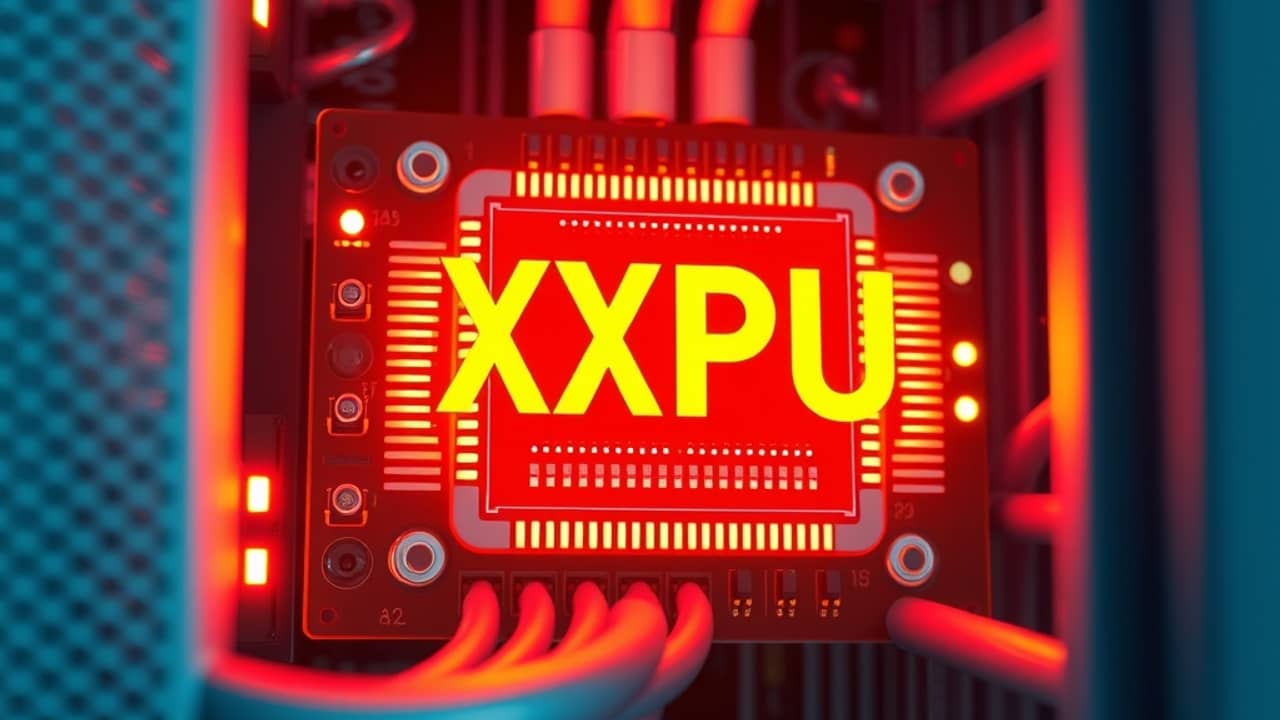
When you ask ChatGPT to rewrite an email, something physical happens. Somewhere in a warehouse-sized building, a chip hums to life, pulls electricity from a power line, processes your words, and sends an answer back. That whole building — not just the software — is what people in the AI world now call an AI factory.
It's a useful image. AI isn't magic. It's manufacturing — intelligence made by machines, the same way a car factory makes cars.
The old engine: GPUs
Until recently, most AI ran on GPUs (graphics processing units). These chips were originally designed to render video game graphics, but researchers discovered they were also great at the math behind AI. A single GPU can do thousands of small calculations at the same time, which is exactly what training and running an AI model needs.
For years, one company — NVIDIA — made most of the best GPUs. That's why "AI chip" and "GPU" became almost the same thing in the news.
The new engines: custom XPUs
Now, the biggest AI companies are designing their own processors. The industry calls them XPUs — the "X" stands for "anything," meaning a custom solution instead of an off-the-shelf GPU. Google has its TPUs, Amazon has Trainium, Microsoft has Maia, and Meta is working on its own. Other "hyperscalers" (a shorthand for the giant cloud companies that run services at massive scale) are following the same path.
Why bother? Three reasons:
- Speed. A chip designed for one specific AI workload can run faster than a general-purpose GPU.
- Cost. When you serve billions of user questions, even small efficiency gains save serious money.
- Control. If you design the chip, you don't have to wait in line for someone else's supply.
What is an "AI factory," really?
An AI factory isn't one machine. It's a system working together:
- Thousands of chips running in sync
- Huge amounts of electricity
- Liquid cooling (water flowing through the racks — the chips get very hot)
- High-speed networking so the chips can talk to each other in microseconds
The "factory" framing matters because it changes how success gets measured. Instead of only asking "how smart is the AI?", the industry now asks: how many tokens per second can this factory produce? (A token is a small chunk of text — roughly four characters — that the AI reads and writes.) How many tokens per watt of electricity? What's the cost per token?
Those numbers decide whether AI services stay fast and affordable for normal users.
Wrap-up
The next time an AI gives you an answer in two seconds, remember: a building full of custom chips made that possible. The AI race isn't only about cleverer models. It's about who can build the smartest, fastest, most efficient factory to run them — and that race is one of the reasons your AI tools keep getting better.