 AI WORLD HQ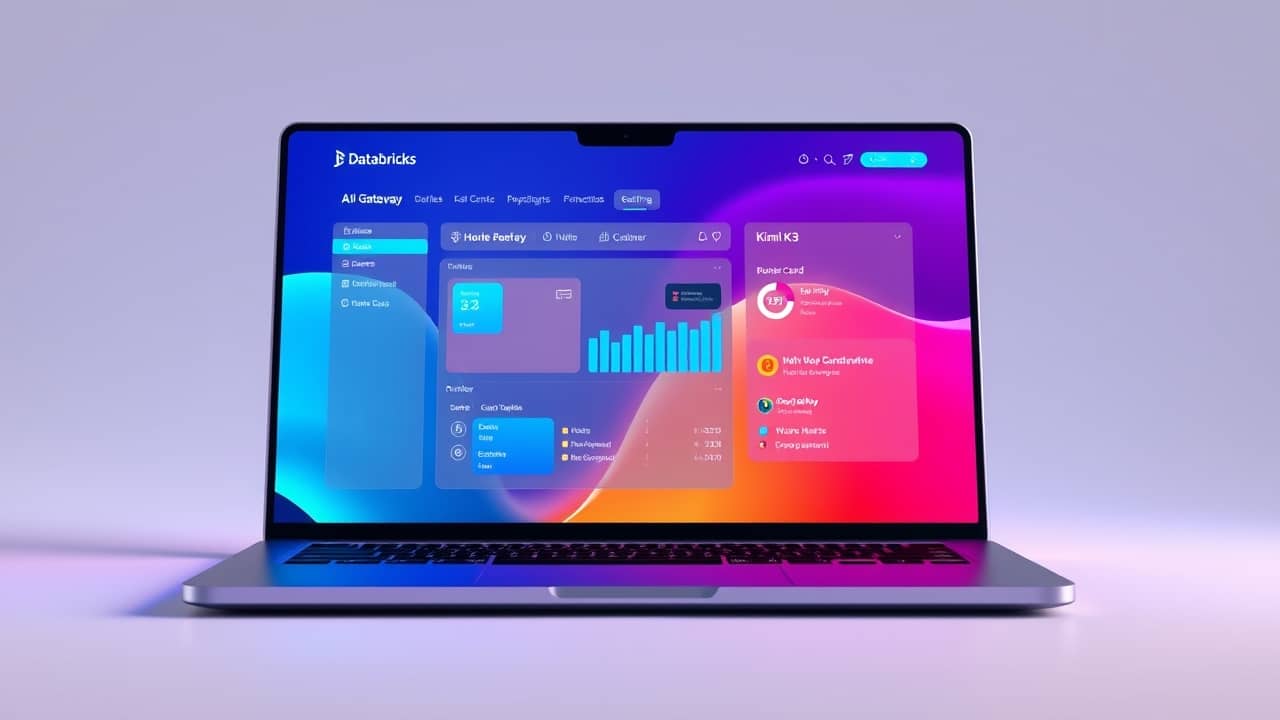
You asked an AI to summarize a long report last week, and it did the job in twenty seconds. You probably never thought about which company built the model behind your answer, or whether a different one might have been a better fit. That choice, invisible to most people, just got a bit wider.
What's actually happening
Moonshot AI, a Chinese AI lab founded in 2023, has made its flagship model — Kimi K3 — available through Databricks' Unity AI Gateway (a single door businesses walk through to plug different AI models into their data workflows).
For most readers, that's a sentence that doesn't quite land. So let's slow it down.
What Kimi K3 is, and what an "open-weight" model means
Kimi K3 is a large language model, or LLM (the same kind of engine that runs ChatGPT or Claude — basically an AI trained on huge amounts of text to predict useful answers). Moonshot built it, and on several independent benchmarks it ranks among the strongest models publicly available right now.
The thing that makes Kimi K3 stand out is that it's an open-weight model. "Weights" are the internal settings that determine how an AI responds. In a closed model like the one behind ChatGPT, those weights are locked inside the company that built the model. In an open-weight model, anyone can download them and run the model on their own computers — usually under a license with conditions.
That distinction matters because it gives universities, startups, and companies that care about data privacy a way to use top-tier AI on their own terms, instead of sending every prompt to a third party.
Why Databricks is the platform that matters here
Databricks is a major US data and AI platform used by thousands of companies to organize their data and run machine-learning jobs. Adding Kimi K3 to its model catalog means a business that already runs on Databricks can now pick Kimi alongside models from OpenAI, Anthropic, and others — all from the same setup.
In plain English: a tool that many companies already trust now offers another choice, which makes it far easier for a business to actually try Kimi in a real workflow instead of treating it as an experiment in a separate sandbox.
Wrap-up
A new AI model joining a major platform can sound like a footnote only data engineers care about. It's actually a signal of something larger: the AI market is no longer a one-horse race, and tools once considered niche are showing up where serious work happens.
If you want a small first step today, run the same prompt in two different AI assistants you already use — say, a work task like "summarize this article in five bullets" — and notice how the answers differ. That quick experiment is the kind of comparison decision-makers can now make at much larger scale.