 AI WORLD HQ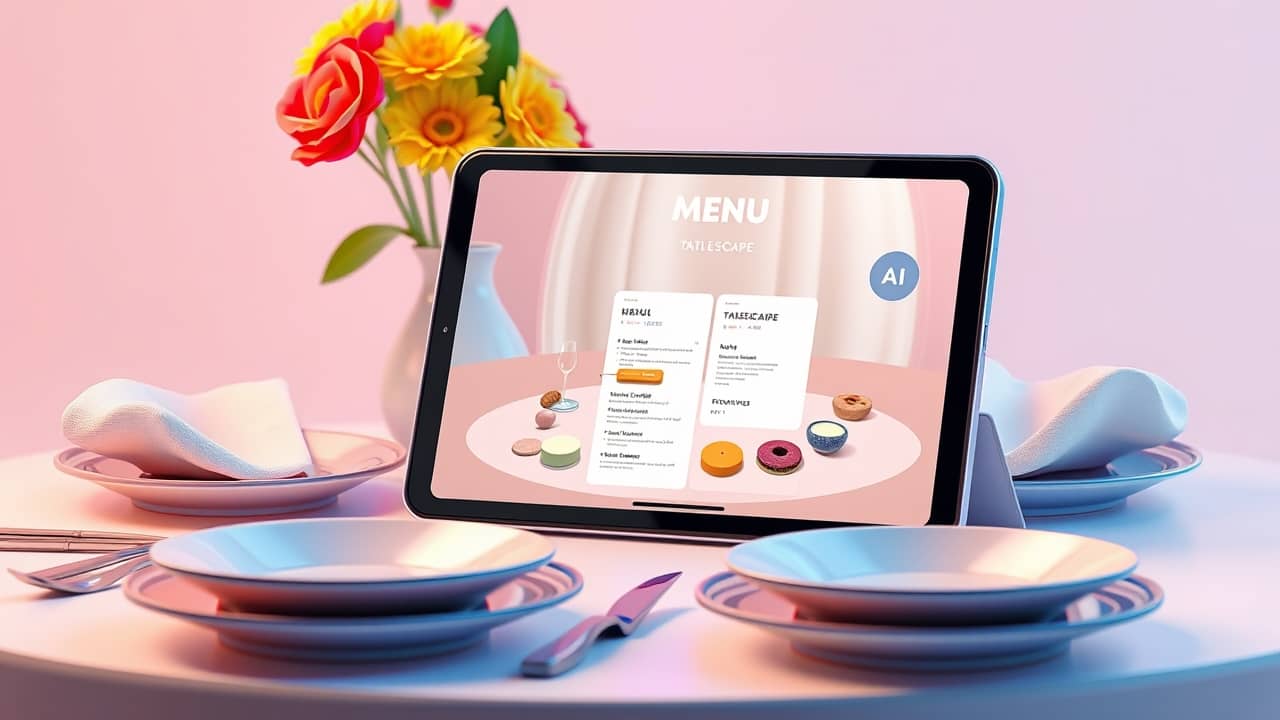
You've got friends coming over on Saturday. The fridge is half-empty, your best serving bowl is at the back of a cupboard, and you genuinely cannot remember the difference between a "tablescape" and just "the table". Sound familiar?
Good news. You can use AI (artificial intelligence — computer tools that can read your words and write helpful answers back) as a quiet sous-chef in your pocket. Google's AI-powered search is the easiest place to start, because you don't need a new app, account or login. You just open a browser and ask.
Here's how to put it to work, step by step.
Before you start
All you need is:
- A free Google account (the one you already use for Gmail or YouTube)
- A phone, tablet or laptop with a web browser
- About 20 minutes the day before your dinner
No paid plan. No new app. No tech skills beyond typing a question.
Step 1 — Set the basics with one prompt
Open Google and switch to AI Mode (it's the colored "AI Mode" button at the top of the search results page, or under the search bar on mobile). Tell it what you're working with in plain English.
💬 Try this prompt:
"I'm hosting dinner for 6 adults on Saturday night. One guest is vegetarian, one is gluten-free. I have about 2 hours to cook. Suggest a 3-course menu I can prep mostly the day before, using ingredients available at a standard Kroger or Safeway."
What you'll see: a tidy menu suggestion with a starter, main, dessert, and a short explanation of why each dish works for your constraints (the dietary needs, the time limit, the prep-ahead bit).
You'll know it worked when: every course has a name, the ingredients are things you'd actually find in a normal supermarket, and there's a clear "make Friday" vs "make Saturday" split.
Step 2 — Build a cooking schedule you can actually follow
A menu is one thing. Knowing when to turn the oven on is another. Ask the same AI to turn the menu into a timeline.
💬 Try this prompt:
"Turn the menu above into a cooking schedule. I have 2 hours from 4pm Saturday before guests arrive. Show me a minute-by-minute plan, and tell me which parts I can prep on Friday."
What you'll see: a written schedule that flows from 4:00pm prep through to guests arriving, with Friday-prep items clearly marked.
You'll know it worked when: the schedule ends before the time your guests arrive, and nothing requires you to be in two places at once.
Step 3 — Sort the tablescape without buying anything new
A tablescape is just a fancy word for "how the table looks" — plates, glasses, candles, the runner down the middle. You don't need to buy anything; you just need to use what you have, well.
💬 Try this prompt:
"I have a plain wooden table, 6 mismatched white plates, 6 clear wine glasses, tea lights, a glass jar, and a small bunch of eucalyptus from the garden. Suggest a tablescape I can set up in 10 minutes that looks intentional, not thrown together."
What you'll see: a description of where each item goes, with one or two specific moves (like tying the eucalyptus with kitchen string, or scattering the tea lights down the middle) that make it look considered.
You'll know it worked when: you can picture the table in your head before you've set a thing.
Step 4 — Solve the awkward "what do I do with..." moments
Every host hits small dilemmas. What can I make ahead? How do I reheat this? What do I serve someone who "doesn't really drink"? Ask one question at a time, like you'd ask a friend.
💬 Try this prompts:
- "How do I reheat a slow-cooked lamb shoulder so it's still juicy?"
- "Suggest 3 non-alcoholic drinks that feel grown-up to serve with dinner."
- "What's a good playlist length for a 4-hour dinner party that starts with chatting and ends with everyone on the couch?"
What you'll see: short, practical answers. Not a thesis. Just the one thing you needed to know.
You'll know it worked when: you read the answer, nod, and get on with your evening.
Step 5 — Save it all in one place so you don't lose it
Here's the part most people skip. Before you close the tab, ask the AI to roll everything up into one document you can save.
💬 Try this prompt:
"Summarize everything we've discussed into one checklist I can copy and paste into Google Docs. Include the menu, the shopping list, the Friday prep list, the Saturday schedule, and the tablescape plan. Format it with headings."
What you'll see: a clean, copy-paste-ready block of text. Paste it into Google Docs (or Notes on your phone), and you've got a reusable host's playbook for next time.
You'll know it worked when: you can close the browser, open one document, and find everything you need in under 10 seconds.
Common mistakes
- Asking 10 questions at once. One prompt, one job. You'll get better answers, and you can build on them with follow-up questions.
- Forgetting to mention the constraints. "6 adults, one vegetarian, one gluten-free, 2 hours" — the more the AI knows, the more useful the answer.
- Trusting the menu without checking the shop. Always glance at the suggested ingredients. If something feels unusual or expensive, ask for a swap before you head to the supermarket.
- Trying to use AI Mode offline. It needs an internet connection. If you're in the middle of cooking, drop your phone in a bowl of flour. It happens to all of us.
Wrap-up
You don't need a new gadget to host a good dinner. You just need a way to get the planning out of your head and onto the page. AI Mode is a free, no-fuss place to do that. Try Step 1 tonight, save the result in a doc, and walk into Saturday with a plan in your back pocket. Your future, slightly-less-stressed self will thank you.