 AI WORLD HQ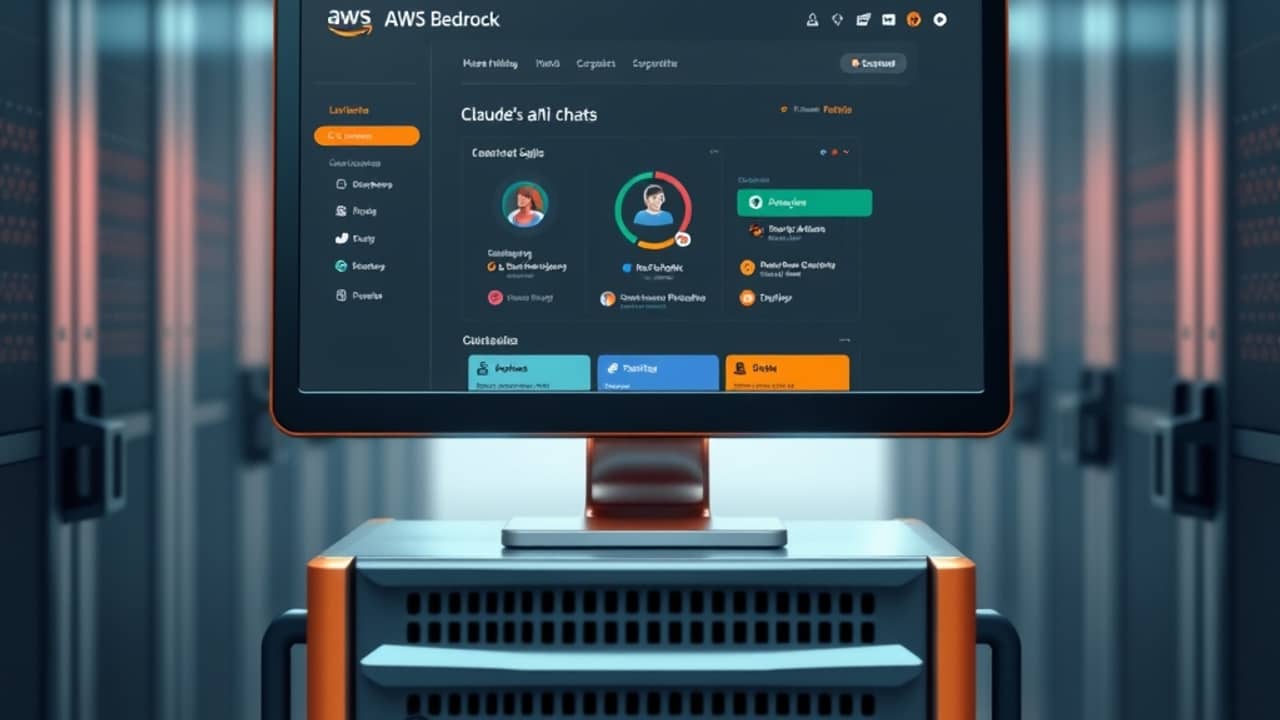
If your company already pays Amazon Web Services for file storage, email, or website hosting, there's a good chance its AI tools will soon run through the same system. That's the practical side of Claude being available on Amazon Bedrock — even if you never write a line of code.
What is Amazon Bedrock, exactly?
Amazon Bedrock is AWS's "AI model marketplace" — a managed service where businesses can pick from several AI models (the "brains" behind ChatGPT-style tools) and plug them into their own apps, without building custom servers.
Think of it like a streaming service for AI. Instead of Netflix giving you movies, Bedrock gives you access to different AI engines — Claude from Anthropic, models from Meta, Mistral, and others — all through one login and one bill. AWS handles the heavy computer work behind the scenes so your team can focus on what the AI is supposed to do.
What changes when Claude runs on Bedrock?
A few practical things, even if you never touch the dashboard:
- One login, one bill. Companies already paying AWS can add Claude to their existing account instead of signing up for a separate service. The same support contact, the same invoice.
- Data stays inside a controlled environment. For industries with strict rules — healthcare, finance, legal, government — this matters a lot. Bedrock offers enterprise-grade safeguards (think of them as extra locks and audit logs) so your prompts and documents don't leave your cloud setup.
- Easier to scale. A team of three can try Claude on Monday, then expand to three hundred users next month, without rebuilding the plumbing each time.
Why this is mostly a business story (for now)
If you're using Claude.ai or ChatGPT on your phone as a personal tool, you don't need to do anything. This isn't a new consumer app — it's a behind-the-scenes option for companies building AI into their own software.
But if your employer rolls out AI features for customer service, document review, internal search, or coding help, there's a real chance those tools will be running on Bedrock. You might see Claude-powered features appear inside software you already use at work, often without a noticeable change in how they work — just better answers behind the scenes.
Wrap-up
The bigger picture is straightforward: AI is moving into the same cloud infrastructure that already runs much of the business internet. For non-technical readers, the practical takeaway is that more workplace tools will quietly start using Claude, often through the same AWS account a company has had for years.
If you want a hands-on sense of what Claude actually does, the simplest first step is to open the Claude.ai website, type a real work question — say, "Summarize last week's meeting notes into three bullet points" — and watch what comes back. That's the same model your company's tools may soon be running through Bedrock, just on a different front door.