 AI WORLD HQ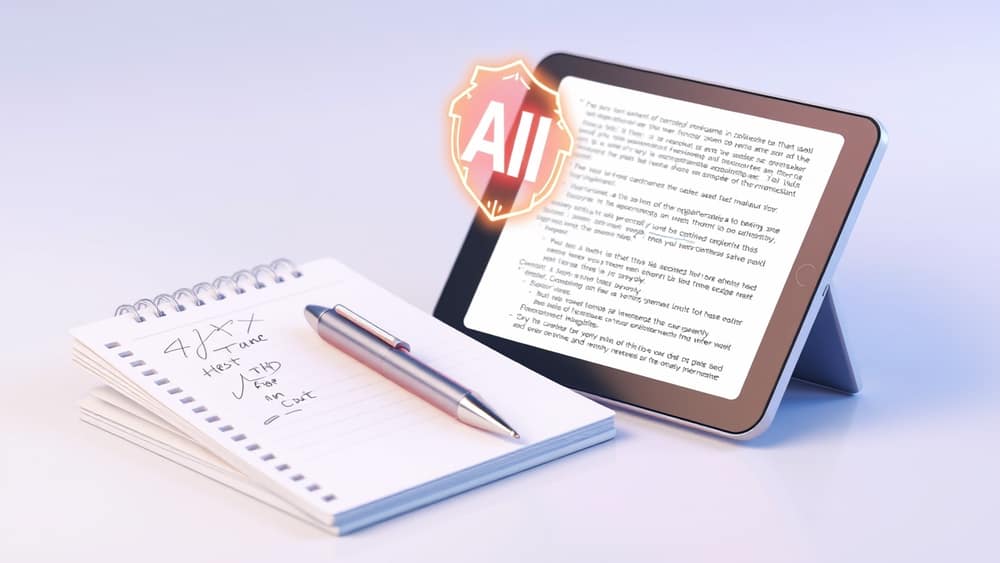
Beyond the Scribble: How AI Organises Your Thoughts
We've all been there: a quick brainstorm, a busy meeting, or a sudden flash of inspiration leaves you with a page full of shorthand, bullet points, or even a voice memo of half-formed ideas. Turning that raw mental download into something clear and shareable used to mean a mental battle and a lot of typing. But thanks to recent advancements in AI, getting from messy thoughts to polished text is now a surprisingly simple process.
The 'What Happened': AI Learns to Understand You
The biggest shift is in how artificial intelligence, particularly what we call large language models (LLMs) – think of them as the incredibly smart engines behind tools like ChatGPT or Gemini – has learned to understand human language. It's not just about recognising words; these AIs can grasp the context, tone, and intent behind your messy notes. They've been trained on vast amounts of text, allowing them to:
- Understand meaning: Even if your grammar is poor or words are missing, an LLM can infer what you're trying to say.
- Recognise structure: It can see the implied connections between your bullet points or sentence fragments.
- Grasp tone: You can tell it to make something sound professional, friendly, or formal, and it understands the nuances.
This leap in natural language processing (NLP) means AI can now do more than just spell check; it can genuinely act as a writing assistant, transforming your raw input into coherent output based on your specific instructions.
From Chaos to Clarity: How AI Transforms Your Notes
So, what does this mean for your jumbled notes? Instead of struggling to piece together your thoughts, you can hand the raw material over to an AI.
- Gather Your Thoughts: Whether it's handwritten notes transcribed onto your phone, a bulleted list typed quickly, or even a voice memo converted to text by your phone's assistant, collect all your unorganised ideas into one digital spot.
- Give Clear Instructions (a 'Prompt'): This is where you tell the AI what you want. A prompt is simply the instruction you give to the AI. Instead of just "tidy this up," you can be specific:
- "Turn these notes into a concise email about the marketing project."
- "Summarise these points into a friendly message for my team."
- "Expand these ideas into a blog post outline."
- Let AI Do the Heavy Lifting: The AI will then get to work. It will fix spelling and grammar, organise your points logically, remove repetitive phrasing, and apply the tone you requested. In seconds, you'll have a first draft that's far more polished than your original notes.
- Refine and Personalise: If the first draft isn't quite right, you don't start from scratch. You simply give the AI another prompt: "Make it shorter," "Add a subject line," or "Change the ending." It’s like having a conversation with a very patient editor.
This process is accessible through web-based AI chat tools (like ChatGPT, Gemini, or Claude) on your computer or phone, and increasingly, through direct integrations with your phone's voice assistant.
Wrap-up
The ability of AI to understand and transform our messy notes is a practical example of how these powerful tools are becoming part of our daily lives. It's less about complex technology and more about a simple workflow that frees you from the tedious task of translating your own thoughts into coherent writing. It means less friction, more clarity, and ultimately, more time for what matters.
Your next step: Take a recent set of unorganised thoughts or bullet points you have. Copy them into an AI chat tool like ChatGPT or Gemini, and give it a simple instruction like, "Organise these notes into three clear paragraphs and correct any spelling mistakes." See the difference for yourself!