 AI WORLD HQ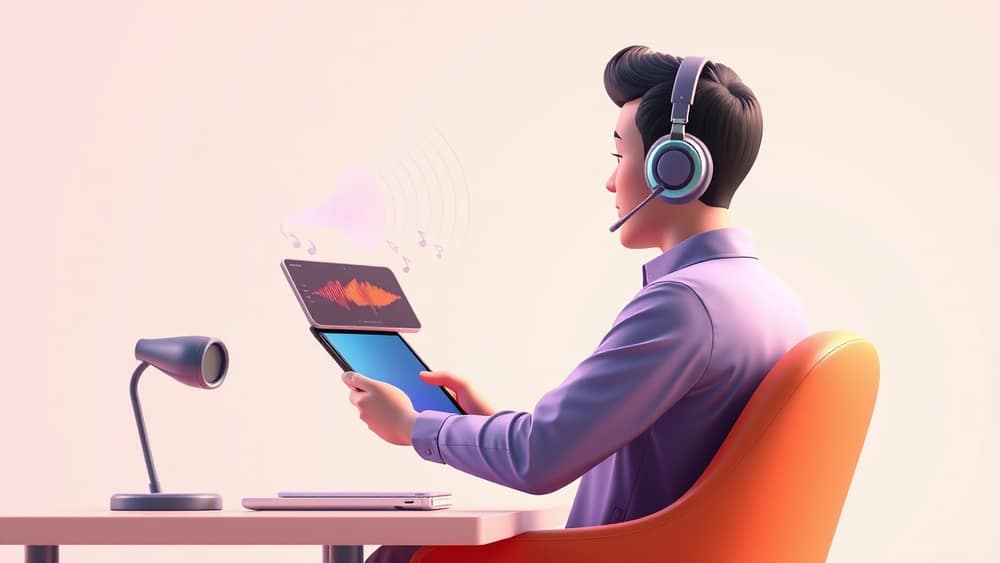
How AI Voice Tech Helps People Speak in Their Own Voice Again
Picture this: you walk into a café, smile at the barista, and say "flat white, please." Simple, right? Now imagine never being able to say those words out loud again — for years, decades, maybe the rest of your life. For millions of people living with conditions that affect speech, that everyday exchange slips away. But a quiet revolution in AI is bringing voices back — not generic computer voices, but a person's actual, real voice.
What's actually happening
This technology is called personalised voice synthesis. In simple terms, it's a way for an AI to learn a specific person's voice from recordings, then "speak" any text in that voice on their behalf. Think of it as a digital voice double — the AI does the talking, but it sounds like the real person.
The process usually has three steps:
- Record — short audio samples of the person's voice, sometimes just a few minutes
- Train — the AI learns that person's specific sound, rhythm, and tone
- Speak — the person types what they want to say, and the AI says it out loud in their voice
Who it helps
The technology matters most for people who've lost — or are losing — the ability to speak. That includes people living with:
- Motor neurone disease (also called MND or ALS)
- Cerebral palsy
- Stroke-related speech loss
- Parkinson's disease
- Other conditions affecting the voice or mouth muscles
For many of these people, the standard synthetic voices on tablets feel flat and unfamiliar. A personalised voice changes that — it sounds like them, because it is them.
The big recent steps
A few organisations are pushing this work forward. The Scott-Morgan Foundation, set up by a roboticist living with MND, has been developing tools to help people keep communicating as their condition progresses. They've partnered with D-ID, a generative AI company (one that uses AI to create images, video, and voice from text) that builds digital avatars — AI-generated video faces that move and speak naturally.
Together, they've been working on systems that combine someone's preserved voice with a digital version of their face. The result: people who've lost nearly all movement can still hold conversations that sound and look like them.
Wrap-up
Personalised voice AI is moving from research labs into real homes and lives. It won't help everyone, and it's not a magic fix — but for people who've lost their speech, hearing their own voice again can mean everything. If you want to know more, start with a chat to your GP or a speech therapist. That first conversation could open a door.